
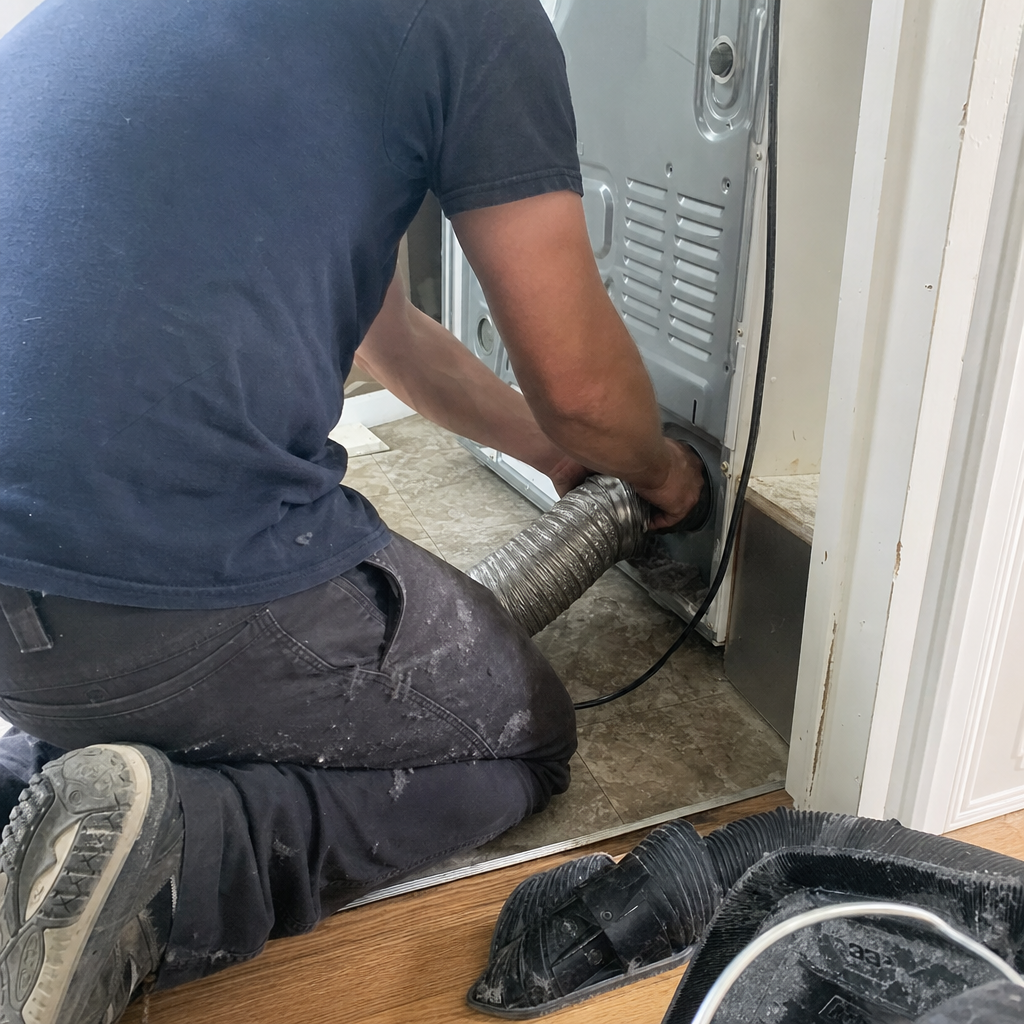
Is Air Duct Cleaning Worth It in Hartford, CT? The Straight Answer Depends on Your House
Air duct cleaning is worth it when your system shows verified contamination — mold, vermin debris, or excessive buildup — and it’s often necessary in Hartford’s older retrofit housing stock where irregular duct geometry traps debris that filters can’t reach. For a purpose-built home with straight-run ductwork and regular filter changes, the EPA’s “clean as needed” guidance means you can likely wait. For a Frog Hollow triple-decker with flex duct stuffed through 1920s plaster walls, that same guidance points toward action, not patience. If you’re unsure which category your home falls into, we offer free inspections throughout Hartford — call (844) 923-4376 and we’ll tell you honestly what we find.
Why the EPA’s Guidance Hits Different in Hartford
The Environmental Protection Agency advises against routine air duct cleaning. Clean only when needed, they say — specifically when you see mold growth inside hard surface ducts, evidence of vermin infestation, or ducts clogged with excessive dust and debris. That’s sound advice for a 1990s suburban ranch in Glastonbury where the ductwork was engineered as a system from the start, with straight runs, proper sizing, and accessible registers.
It’s incomplete advice for much of Hartford.
Our city’s dominant housing stock — triple-deckers and two-family wood-frames in Frog Hollow, the South End, Clay-Arsenal, and Blue Hills — wasn’t built for forced air at all. These structures were designed around steam or hot-water radiator heat. When central HVAC came later, ductwork was retrofit through original plaster walls, closet chases, and vertical cavities never meant to carry airflow. The result is irregular geometry: sharp bends, dead-leg branches, and flex duct runs stuffed vertically through 1910s construction with no standard access points. In a building like this, debris doesn’t distribute evenly or flush out with normal system operation. It accumulates at the bends and low-flow zones where no filter can touch it.
We’ve pulled out material from Hartford systems that hadn’t been touched in twenty, thirty, sometimes forty years. Not surface dust — compacted layers of construction debris from prior renovations, pet dander, pollen that migrated in through window gaps, and in humid conditions, the early stages of biofilm growth. The EPA’s three “clean as needed” conditions? In this housing stock, they show up more often than you’d hope.
The Humidity Factor: Why Hartford’s River Valley Climate Matters
Hartford sits in the Connecticut River Valley, a thermal trough that traps heat and moisture through the summer months. Our summers run measurably hotter and more humid than coastal Connecticut cities like New Haven or Bridgeport. That humidity doesn’t stay outside.
When your air conditioner runs, the evaporator coil strips moisture from the air — but not all of it, and not uniformly. Low-airflow sections of ductwork, especially dead-legs and tight bends in retrofit systems, stay damp longer. Combine that with organic debris already trapped there, and you’ve got conditions where mold and bacterial biofilm can establish and spread. We’ve opened duct sections in Hartford homes where the interior surface had visible microbial growth that the homeowner never smelled or saw, because the registers were in ceiling locations and the airflow was just strong enough to keep spores circulating rather than settling.
This isn’t theoretical. Post-cooling-season cleaning — September through early November — is genuinely more necessary here than in drier regions. The humidity loading creates a lower threshold for what counts as “excessive debris” or “as needed.” A system that might coast through a decade in Denver needs eyes on it sooner in Hartford.
What “Worth It” Means for Different Hartford Scenarios
We’ve learned to ask specific questions before recommending service. Here’s how the answer breaks down for common local situations:
- Post-renovation homes: If you’ve had plaster work, flooring replacement, or any wall penetration in a Hartford older home, construction dust has entered your system. Worth it — and often urgent, since plaster dust is abrasive to blower motors and coils.
- Allergy or respiratory symptoms with no other cause: When a homeowner has done the mattress covers, the HEPA vacuum, the window sealing, and still wakes congested, we find contaminated ductwork often enough to make inspection worthwhile. The medical evidence for systemic health improvement from cleaning already-clean systems is weak; the evidence for improvement after documented mold or debris remediation is stronger. We draw that line honestly.
- Never-cleaned systems in pre-1940 housing: If your ductwork was retrofit before you owned the home and has no service history, an inspection is worth the time. We’ve found systems where the previous owner never knew the ducts existed, let alone maintained them.
- Regularly maintained systems in purpose-built homes: If you’re changing MERV-8 or better filters on schedule, have straight-run ductwork with no moisture issues, and no symptoms, routine cleaning probably isn’t worth the cost. We’ll tell you that if we see it.
Common Local Scenarios We See
The Flatbush Avenue triple-decker: Flex duct run vertically through a 1910s plaster wall chase, no register access, original installation sometime in the 1970s. We use smaller-diameter Rotobrush equipment with custom insertion angles that simply wouldn’t be needed in West Hartford ranch-style construction. The debris at the lower elbow is always the worst — gravity and humidity conspire there.
The New Britain Avenue two-family: Second-floor unit with a duct run through an uninsulated attic space. Summer humidity condenses on the duct exterior, insulation degrades, and eventually the interior surface develops biofilm. The tenant smells “something musty” but can’t locate it. We can.
The Parkville condo conversion: Former factory building with high ceilings and ductwork added during the 2005 conversion. The system runs constantly but never seemed to cool properly. Turned out the ducts were sized for a smaller load, running at higher velocity that actually prevented proper filtration. Cleaning helped, but sealing and balancing helped more — which is why we offer the full scope, not just vacuuming.
What Honest Assessment Looks Like
Steven Ramirez, our Owner and Lead Technician, grew up in Hartford’s Parkville neighborhood a few blocks from the old Colt factory. He still lives within ten minutes of most homes we service. His mechanical foundation came from Manchester Community College’s HVAC program, where the coursework emphasized thinking about airflow as an integrated system rather than a collection of parts. For 14 years, he’s run Empire Air Duct Cleaning with no rotating crews and no subcontractors — the person you book is the person who does the work.
That structure matters for this specific question. When Steven inspects a system, he’s not passing a clipboard report up a chain. He’s looking at your actual ductwork with professional-grade equipment — Rotobrush and Nikro tools, the same industrial-grade systems commercial contractors use — and rendering a judgment he’ll stand behind personally.
His standard is straightforward: “I tell you what I found, not just what I charged.” He’s turned down jobs. Walked into Hartford homes where the ducts were genuinely clean enough to leave alone, told the homeowner so, and left without a sale. That’s not charity — it’s the only way to maintain the reputation that earned us 1,074 verified reviews at a 4.9-star rating. In a city where word travels fast through neighborhood networks, a bad recommendation kills more business than one declined job ever could.
What the Work Actually Costs and Involves
When cleaning is warranted, here’s what you’re paying for and what the range looks like in the Hartford market — see our full guide on Whole House Air Duct Cleaning Cost in Hartford, CT for detailed pricing:
| Service Component | Typical Hartford Range | What Affects Price |
|---|---|---|
| Standard residential air duct cleaning (single system, up to 12 vents) | $350 – $650 | Number of vents, accessibility, contamination level |
| Multi-family / triple-decker unit (retrofit ductwork, restricted access) | $450 – $850 | Custom equipment needs, plaster-wall chases, dead-leg complexity |
| HVAC cleaning (coils, blower, cabinet) | $200 – $400 | System age, coil accessibility, contamination severity |
| Air quality sanitizing (mold/biofilm remediation) | $150 – $300 add-on | Extent of microbial growth, product selection |
| Duct repair & sealing (per linear foot or section) | $200 – $600 | Location of leaks, material needed, access difficulty |
These ranges reflect Affordable Air Duct Cleaning in Hartford, CT with professional-grade work and industrial equipment — not coupon-bait pricing that doubles once the technician arrives. We use Rotobrush and Nikro systems specifically because they handle the irregular geometries common in our local housing stock. Consumer-grade vacuums, even “prosumer” models, can’t navigate the tight chases and sharp bends we encounter in Frog Hollow or Clay-Arsenal buildings.
We’re also trained and equipped to work with premium air-quality brands including Aprilaire, Abatement Technologies, and Guardsman — meaning if your system includes integrated humidifiers, UV units, or advanced filtration, we service the full stack rather than cleaning around it.
How to Know If Your System Needs Attention
You don’t need to guess. Here are the specific checks that actually matter, framed as what you can observe versus what requires professional inspection:
What you can check yourself: Remove a floor or ceiling register and shine a flashlight into the duct boot. If you see visible mold, heavy debris accumulation, or evidence of pests (droppings, nesting material), that’s a clear signal. Note whether the debris is loose surface dust or compacted, layered buildup — the latter indicates long-term accumulation that won’t flush out on its own. Also check your filter slot: if the filter is clean but you’re still seeing dust accumulation on furniture near vents, the ductwork downstream is likely the source.
What requires professional inspection: Internal duct surfaces beyond the boot, evaporator coil condition, blower wheel buildup, and the integrity of duct sealing. We use borescope cameras to examine sections that aren’t visible from registers — essential in Hartford retrofit systems where the worst debris hides at bends and dead-legs. Moisture meter readings at low-flow sections can identify humidity-driven biofilm risk before it’s visible.
If you’re seeing any of the self-check signals, or if your home matches the high-risk profile — pre-1940 construction, retrofit ductwork, no service history, recent renovation, or persistent allergy symptoms — an inspection is worth the time. We don’t charge for the assessment, and we’ll tell you straight if the system doesn’t need cleaning.
FAQs
Standard residential air duct cleaning in Hartford typically runs $350 to $650 for a single system with up to 12 vents, while retrofit systems in older multi-family buildings often range $450 to $850 due to access complexity. For a complete breakdown, see How Much Does Air Duct Cleaning Cost? (2026 Price Guide) — Hartford, CT. The exact price depends on vent count, contamination level, and whether your ductwork requires custom equipment for irregular chases or plaster-wall runs. Call (844) 923-4376 for a free, exact quote — we assess before we price, not after.
It can be, when done by bait-and-switch operators who quote $99 then pressure you into unnecessary add-ons — but legitimate cleaning with documented contamination is not a scam. The key is matching the service to actual conditions: we use borescope inspection to show you what we found before recommending work, and we’ve declined jobs where the system was genuinely clean. Our 1,074 verified reviews at 4.9 stars reflect that transparency.
It can help when the ductwork is actually contaminated with mold, dust mite debris, or accumulated allergens — the evidence for improvement after documented remediation is solid. The evidence for systemic health improvement from cleaning already-clean systems is weak, so we don’t promise medical benefits we can’t verify. If your symptoms persist despite clean ducts, the source is elsewhere, and we’ll tell you that.
There’s no fixed schedule that fits all Hartford homes — the EPA’s “as needed” guidance applies, but our Connecticut River Valley humidity means the threshold for “needed” arrives sooner in retrofit systems with low-airflow sections. For a deeper look at timing considerations, see How Often to Clean Air Ducts? (Hartford, CT). Purpose-built homes with straight duct runs and regular filter changes may go 7-10 years; pre-1940 multi-family buildings with retrofit ductwork often benefit from inspection every 3-5 years, with post-renovation or post-water-damage cleaning as immediate exceptions.
When You’re Ready for a Straight Answer
If you’d rather have your system looked at than keep wondering, Empire Air Duct Cleaning Service Greater Hartford offers a no-pressure assessment anywhere in Hartford — from Parkville to Blue Hills, Frog Hollow to the South End. We’ll inspect with professional-grade equipment, show you what we find, and tell you honestly whether cleaning is worth it for your specific house. Call (844) 923-4376 to schedule, or visit our home page to learn more about our full range of services. For details on our core offering, see Air Duct Cleaning.
Written by Steven Ramirez, Owner & Lead Technician at Empire Air Duct Cleaning Service Greater Hartford, serving Hartford, CT.