
Honeywell Air Duct Cleaning in Hartford: A Homeowner’s Guide
Honeywell whole-home air filtration and UV systems need clean ductwork upstream to deliver their promised performance. In Hartford, where older housing stock and seasonal pollen loads already strain indoor air quality, installing a Honeywell media filter or electronic air cleaner on a contaminated duct system means you’re filtering air through a dirty delivery network. We’ve cleaned ducts in Hartford homes where homeowners spent $800–$1,400 on Honeywell upgrades only to see minimal improvement because bypass leakage and biofilm in the ductwork undermined the new equipment.
If you’re considering a Honeywell system or already have one installed, Empire Air Duct Cleaning Service Greater Hartford home can assess your ductwork condition — call (844) 923-4376 for a free estimate.
Why Honeywell Systems Depend on Clean Ducts
Honeywell makes some of the most respected whole-home air quality equipment on the market — their F100 and F300 electronic air cleaners, TrueCLEAN systems, and UV treatment units are common upgrades in Hartford’s colonial, cape, and ranch-style homes. But here’s what the product literature doesn’t emphasize: these systems are only as effective as the ductwork that carries the air.
When we inspect Hartford homes with newly installed Honeywell filtration, we regularly find three problems:
- Bypass leakage around filter cabinets: If your return ducts are coated with dust and debris, pressure imbalances force unfiltered air through gaps and seams, bypassing the Honeywell media entirely.
- Contaminated supply lines downstream: A Honeywell filter at the air handler can’t clean what the ducts have already deposited — mold, construction debris, or rodent droppings in supply branches re-contaminate “clean” air before it reaches your rooms.
- UV system shadowing: Honeywell UV lamps installed at the coil can’t treat biofilm growing in distant duct runs where light doesn’t reach.
In West Hartford last month, we cleaned a 1950s ranch where the homeowner had installed a Honeywell F300E electronic air cleaner two years prior. The filter was spotless — but the return plenum behind it was caked with an inch of compacted dust, and supply registers in two bedrooms showed black mold spotting. The filter was working hard; the ductwork was undoing its work.
The Right Sequence: Duct Cleaning Before or After Honeywell Installation?
Most HVAC dealers in Hartford sell Honeywell equipment as an add-on during system replacement or as a standalone upgrade. Few mention duct cleaning as a prerequisite — partly because it’s outside their scope, partly because it delays the sale.
Here’s the sequence we’ve learned works after 14 years in Hartford homes:
- Clean first, install second: Professional duct cleaning with Rotobrush and Nikro equipment removes the reservoir of contaminants that would immediately load your new Honeywell filter and reduce its effective lifespan.
- Seal during cleaning: We repair and seal duct seams while accessible, reducing the bypass leakage that lets dirty air skirt your filtration.
- Install the Honeywell system on verified-clean infrastructure: Your filter change intervals will be longer, your pressure drop lower, and your air quality actually measurable.
We’ve been called to homes in the South End and Blue Hills where homeowners installed Honeywell UV systems first, then noticed persistent musty odors. The UV was treating coil surfaces beautifully — but biofilm in the flex duct runs, installed during a 1980s renovation, never saw the light. Duct cleaning after installation still helps, but you’re paying to protect equipment you already bought rather than optimizing it from day one.
How Honeywell UV Systems Interact with Duct Contamination
Honeywell’s UV Air Purifier and similar lamp-based systems are marketed for “killing mold and bacteria.” The technology works — when the organisms are exposed to sufficient UV-C dosage. The gap most Hartford homeowners miss: UV lamps are point-source treatments, typically mounted at the evaporator coil or in the return plenum.
What they don’t reach:
- Horizontal duct runs where condensation pools and microbial growth establishes
- Dead legs and abandoned duct branches common in Hartford’s modified Victorians and converted multi-families
- Flexible ductwork with ribbed interiors that shield organisms in shadowed crevices
In our experience across Hartford’s Asylum Hill and Parkville neighborhoods, UV effectiveness drops significantly when upstream ductwork harbors active mold colonies. The spores and fragments continue circulating, and the UV dosage at any single point isn’t designed to treat a moving airstream comprehensively. We coordinate with HVAC contractors who install Honeywell UV systems — they handle the electrical and mounting, we ensure the duct environment doesn’t overwhelm the treatment.
Aligning Maintenance Schedules: Duct Cleaning and Honeywell Filter Changes
Honeywell media filters typically need replacement every 6–12 months depending on model and household conditions. Electronic air cleaner cells need annual cleaning. But what about the ductwork itself?
There’s no universal answer, but here’s what we’ve developed for Hartford’s climate and housing:
| Household Situation | Honeywell Filter Interval | Duct Cleaning Interval |
|---|---|---|
| Standard residential, no pets, no recent renovation | 12 months | 3–5 years |
| Homes with pets, allergies, or near Hartford’s industrial corridors | 6–9 months | 2–3 years |
| Post-renovation or pre-Honeywell install | Start fresh, then 12 months | Immediate, then assess |
| Older homes with original ductwork (pre-1980 common in Hartford) | 6 months | 2 years with inspection |
The key is synchronization. We mark duct cleaning dates on the same calendar as filter changes so Hartford homeowners build a coherent maintenance rhythm rather than reactive emergency calls. Steven leads every job personally, so the notes from your cleaning — duct material, seam condition, contamination type — inform the next visit rather than starting from zero.
What We Actually Find: Before and After Honeywell Upgrades
Product guides show clean installation photos. We see the reality inside Hartford walls.
Before Honeywell install (typical findings):
- Return plenums packed with gray, fibrous dust from decades of filtration bypass
- Supply registers in second-floor bedrooms blackened with what homeowners mistake for “soot” — usually mold feeding on organic dust in humid duct corners
- Construction debris from 1970s or 1990s renovations: drywall chunks, insulation fragments, even dropped tools in older homes
- Flex duct in additions (common in West Hartford and Farmington Valley expansions) collapsed or kinked, creating turbulence that deposits debris
After Honeywell install without prior cleaning:
- Filters loading within 2–3 months instead of 6–12, with visible bypass staining on filter frames
- Persistent complaints that “the air still smells” — because the odor source is in the ducts, not the airstream at the filter
- Electronic air cleaner cells fouled with sticky, organic deposits that resist standard washing
We pulled a dead starling from a return duct in a North End colonial last spring. The homeowner’s Honeywell F100 was six months old and already showing pressure drop warnings. The filter was fine. The duct was the problem.
When to Call a Pro
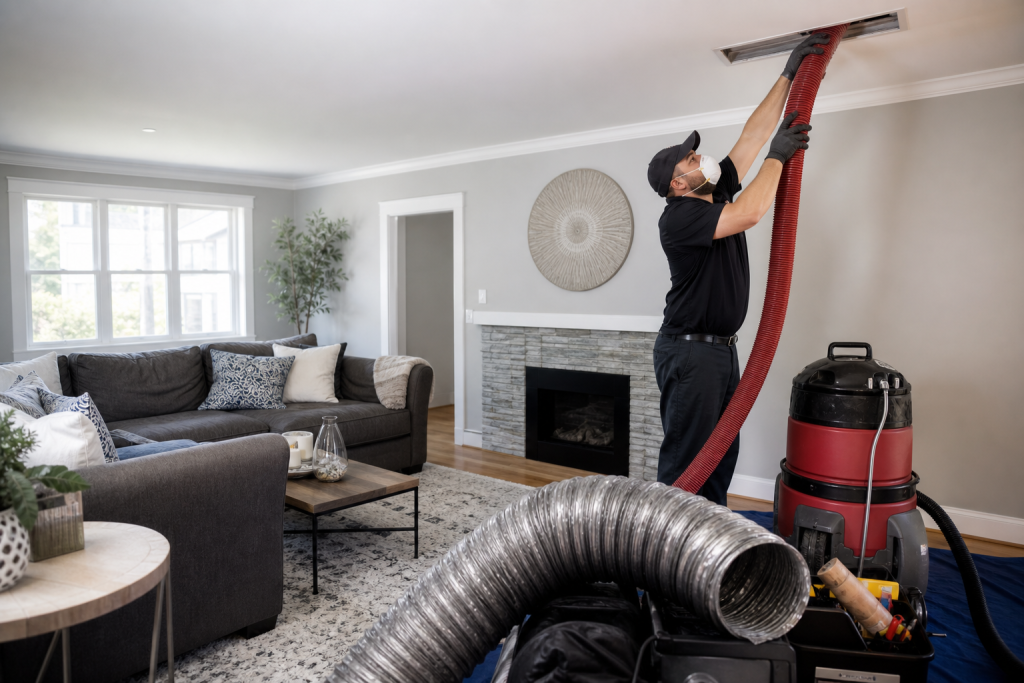
If you’re planning a Honeywell upgrade, schedule duct cleaning first — not as an afterthought. If you already have Honeywell equipment and aren’t seeing the air quality improvement you expected, the ducts are the first place to look. We use professional-grade Rotobrush and Nikro equipment, inspect with remote cameras, and document what we find so you can make informed decisions about your system.
Related services in Hartford: Air Duct Cleaning in Manchester, Dryer Vent Cleaning in Manchester, and HVAC Cleaning in Manchester.
The Bottom Line
Honeywell builds excellent air quality equipment, but it’s not a self-contained solution. The ductwork is the delivery system — and in Hartford’s aging housing stock, that system often needs attention before or alongside any premium filtration upgrade. Over 1,000 verified five-star reviews from Hartford-area homeowners reflect what we’ve learned across 14 years: the homeowners who clean first and install second get the performance they paid for.
If you’re in Hartford and want to verify whether your ducts are ready for a Honeywell system — or whether they’re undermining one you already own — Empire Air Duct Cleaning Service Greater Hartford offers free estimates. Call (844) 923-4376 and Steven will walk through what we actually find in homes like yours.
Frequently Asked Questions
It will operate, but not at advertised efficiency. Bypass leakage around contaminated duct seams lets unfiltered air mix with cleaned air, and downstream duct deposits re-contaminate supply air before it reaches your rooms. For actual performance, clean the infrastructure first. Call (844) 923-4376 for a free duct assessment — estimates are free.
Whole-home duct cleaning in Hartford typically ranges from $400–$800 for standard residential systems, with larger or more complex layouts running higher. The investment typically extends Honeywell filter life and improves measurable airflow. For exact pricing on your home, call (844) 923-4376 — we provide upfront quotes after inspection, not ballpark guesses.
UV installation involves electrical work at the air handler and precise placement for dosage calculation — we recommend a licensed HVAC contractor for the electrical and mounting, with duct cleaning completed first so the UV treats clean surfaces rather than shadowed biofilm. We coordinate with several Hartford-area HVAC contractors who install Honeywell equipment; call (844) 923-4376 and we can discuss timing.
Signs include filters loading faster than the stated interval, visible dust accumulation on supply registers despite filtration, persistent odors, or pressure drop warnings on your HVAC system. We inspect with remote cameras and provide documentation. If you’re seeing these symptoms in your Hartford home, call (844) 923-4376 — we’ll show you what’s actually in there.
Written by Steven Ramirez, Owner & Lead Technician at Empire Air Duct Cleaning Service Greater Hartford, serving Hartford since 2012.
Need Air Duct Cleaning Help?
Call Empire Air Duct Cleaning Service Greater Hartford — licensed & insured, available 24/7 in Hartford.
(844) 923-4376