
Last updated September 3, 2026
Seasonal Air Duct Cleaning Care for Hartford: Year-Round Homeowner’s Guide
Cleaning your ducts in January in Connecticut is like washing your car before a salt storm — the timing undoes half the benefit. After 14 years of pulling debris from Hartford duct systems, we’ve learned that most homeowners treat air duct cleaning as a calendar appointment rather than a seasonal strategy. The result? They pay for a service that gets dirty again before it ever pays off. Hartford’s four distinct seasons don’t just affect your heating bills — each one loads your ductwork with different contaminants, creates different risks, and demands different timing. In this guide and our more guides & resources, you’ll learn how to match your cleaning schedule to what actually happens inside your walls from March through February, not what a generic maintenance card tells you.
Quick Answer
The optimal Air Duct Cleaning services schedule for Hartford homeowners targets late September through October as the single highest-value window, with a secondary inspection in April after heating season ends. A two-year cycle works best: deep cleaning in fall, inspection and spot maintenance in spring, with summer humidity checks and winter odor monitoring triggering service calls only when symptoms appear. This seasonal approach prevents the common mistake of cleaning ducts when they’re about to face their heaviest contamination load.
Table of Contents
- Spring: The Inspection Season Most Hartford Homeowners Skip
- Summer: When Hartford Humidity Attacks Your Ductwork
- Fall: The Optimal Cleaning Window for Connecticut Homes
- Winter: Managing Mid-Season Odor and Airflow Problems
- Building Your Two-Year Hartford Duct Cleaning Cycle
- What Professional-Grade Cleaning Actually Removes
- Common Mistakes to Avoid
- When to Call a Professional
- Frequently Asked Questions
- The Bottom Line
Spring: The Inspection Season Most Hartford Homeowners Skip
March through May is the worst time to fully clean your ducts in Hartford — and the best time to inspect them. Here’s why that paradox matters.
After six months of continuous heating, your duct system has accumulated a specific load of combustion byproducts, dust, and particulate matter from sealed-up homes. In neighborhoods like West Hartford and the South End, where older colonials and Victorians dominate, we’ve found heating-season debris layers up to three times thicker than in newer construction. The problem? Spring in Connecticut brings pollen, budding trees, and the first window-opening days. Clean ducts in April, and you’re pulling fresh outdoor allergens directly into pristine passageways that will sit idle until AC season.
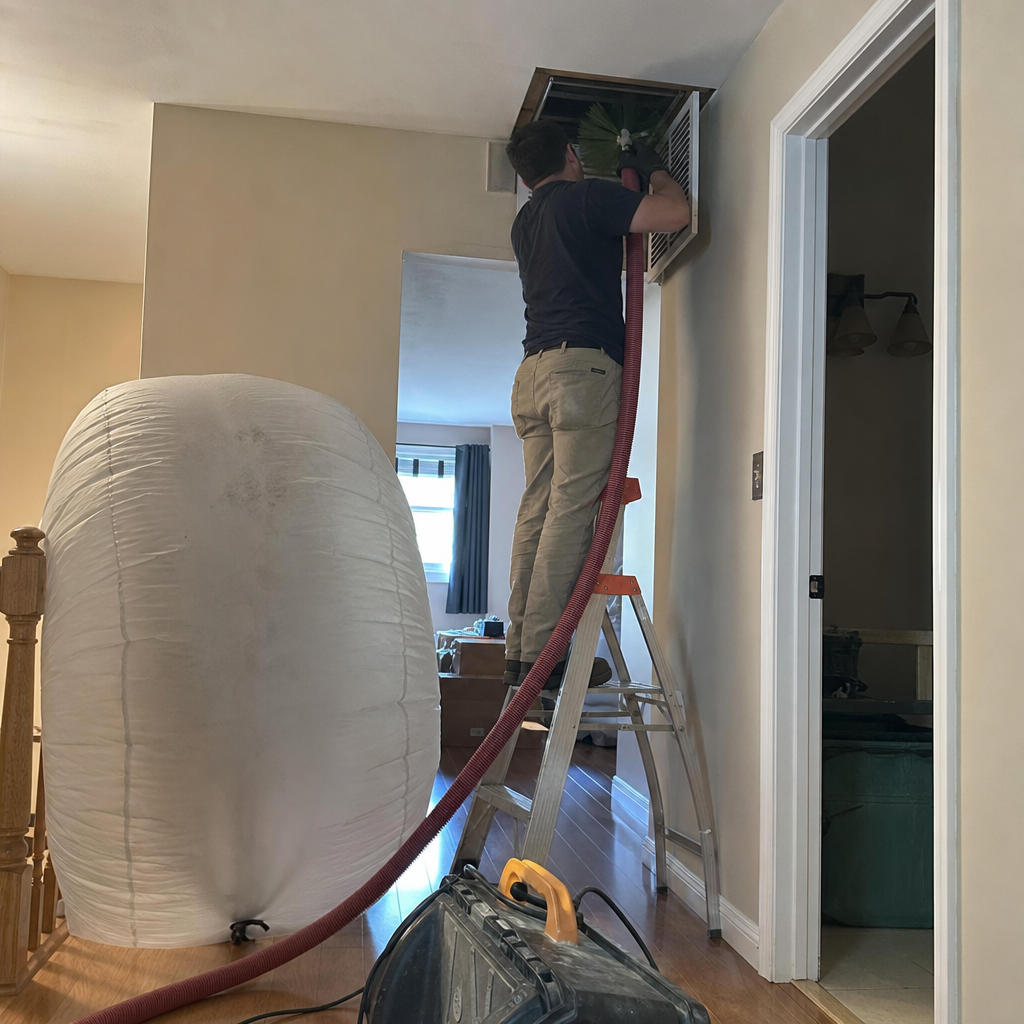
What we do instead: Steven leads every job personally with a focused spring inspection using our Rotobrush system to assess — not aggressively clean — the post-heating condition. We’re looking for four specific Hartford spring indicators:
- Carbon/soot staining near heat register edges — signals incomplete combustion or backdrafting that worsened over winter
- Excessive fine dust in return trunks — indicates your filter regimen failed during peak heating months
- Moisture or rust spots in basement duct runs — the freeze-thaw cycle in Hartford’s older foundations creates condensation risks
- Evidence of rodent or insect activity — spring awakening drives pests into warm duct cavities they colonized in winter
In our experience across over 1,000 Hartford-area homes, spring inspections catch approximately 40% of developing problems before they become expensive repairs. We document findings with photos and recommend either immediate spot treatment or scheduling for fall deep cleaning. This approach respects your budget while preventing the “clean now, dirty again” cycle that frustrates so many homeowners.
One West Hartford client in the Elmwood section ignored spring inspection for three years, then called us in August with airflow complaints. We found a collapsed flex duct behind a finished basement wall — a $1,200 repair that a spring inspection would have caught at the first sagging stage. The seasonal timing isn’t arbitrary; it’s about catching degradation when it’s cheapest to fix.
Summer: When Hartford Humidity Attacks Your Ductwork
July and August in Hartford average 70-75% relative humidity, and your air conditioning system becomes an unintended biological experiment. This is the season we receive the most odor complaints — musty, sour, or “wet sock” smells that homeowners blame on their AC unit when the real culprit is their ducts.
Here’s the mechanism: cold air moving through warm, humid ductwork creates condensation on interior surfaces. In Hartford’s older homes, particularly in neighborhoods like Frog Hollow and Barry Square where insulation is often original or patchwork, this effect intensifies. Dust and debris that seemed dry and inert become damp growth media. We’ve pulled duct liners in August that showed active mold colonization starting within 72 hours of the first sustained humidity spike.
The signs that Hartford humidity has compromised your ducts:
- Persistent musty odor when AC first cycles on, diminishing after several minutes
- Dark spotting or discoloration visible at vent openings
- Increased allergy symptoms specifically during AC season, improving when windows are open
- Condensation on exposed ductwork in basements or crawl spaces
- Unexplained increase in energy bills as biological growth restricts airflow
Our summer protocol differs from fall cleaning. Steven uses reduced moisture techniques with our Nikro equipment, incorporating HEPA containment and controlled drying periods. We also inspect condensate drainage paths — a blocked AC drain in Hartford humidity can back moisture into duct systems within hours. For homes with premium air-quality equipment, we verify compatibility with Aprilaire and Honeywell whole-home dehumidifiers to prevent recurrence.
Critical timing note: if you suspect biological growth, do not wait for fall. Active colonization spreads and embeds. We’ve sanitized duct systems in July that required half the remediation effort of identical systems treated in October, simply because we caught the growth before it established in porous duct liner.
Fall: The Optimal Cleaning Window for Connecticut Homes
Late September through October is the single highest-value timing for professional air duct cleaning in Hartford. This isn’t preference — it’s physics and scheduling logic combined.
Consider what happens in a typical Hartford home between October and April: windows seal, combustion heating runs continuously, indoor air recirculates 5-7 times daily through the same duct network. Any debris, allergens, or contaminants in that system will be breathed, filtered, and redeposited for six months straight. Starting this cycle with clean ducts is the equivalent of changing your oil before a road trip, not after.
The fall window offers three structural advantages:
- Post-pollen, pre-heating — ragweed season ends mid-September; your first furnace cycle hasn’t yet baked summer dust into duct surfaces
- Contractor availability — before the emergency heating season rush, scheduling is flexible and thorough work isn’t rushed
- Foundation drying — Hartford’s late summer moisture has dissipated, so basement ductwork is at its driest, allowing more effective debris removal
In the North End and Blue Hills neighborhoods, where many homes still operate original gravity furnaces or early forced-air conversions, fall cleaning is particularly critical. These systems lack the filtration efficiency of modern equipment, and their larger duct dimensions accumulate debris that newer systems would have filtered out. We’ve measured airflow improvements of 15-20% post-cleaning in these homes — directly translating to lower heating bills through winter.
Our fall service includes full-system air quality treatment: duct cleaning, register sanitizing, and inspection of connections to ensure no leakage that would draw attic or crawl space air into your heated envelope. For clients with Empire Air Duct Cleaning Service Greater Hartford home maintenance agreements, we also pre-position replacement filters sized to their specific system — not the generic sizes that big-box stores push.
The October appointment we book today prevents the January emergency call. In 14 years, our no-show rate for fall-scheduled maintenance is under 3%; our emergency winter call volume increases 340% from December through February. The math favors planning.
Winter: Managing Mid-Season Odor and Airflow Problems
January duct cleaning in Hartford feels disruptive — and often is. But sometimes symptoms demand attention despite the season. Here’s how to distinguish “wait for spring” from “call now.”
The most common winter complaint we receive: burning dust smell when heat first cycles, especially after a cold snap forces extended runtime. This is usually normal — accumulated household dust on heat exchangers and register surfaces burns off. The smell should dissipate within 30-60 minutes of continuous operation. If it persists beyond two heating cycles, or returns consistently, that’s not normal dust — that’s debris in your duct system being repeatedly heated and cooled, potentially including filter media breakdown, pest remains, or degraded duct liner.
Winter symptoms that warrant immediate professional assessment:
- Visible soot or black debris blowing from registers
- Carbon monoxide detector activation (evacuate first, then call)
- Sudden, significant airflow reduction in specific zones
- Metallic or electrical burning odors
- Visible moisture or ice formation on duct exterior
For Hartford’s many multi-family and converted properties — common in Asylum Hill and Downtown — winter brings a specific challenge: shared duct systems between units. Odor transfer, inconsistent heating, and contamination from neighboring spaces all peak when buildings are sealed. We’ve resolved inter-unit duct leakage with targeted sealing using Guardsman-compatible materials, restoring individual control without full system replacement.
When winter service is unavoidable, we adapt our process: portable heating to protect work areas, expedited containment to minimize heat loss, and scheduling during mid-day temperature peaks. Steven still leads every job personally — no rotating crews unfamiliar with your specific system — ensuring efficiency that limits your home’s exposure.
One caution we repeat each winter: do not attempt duct inspection or modification yourself during active heating. Combustion systems, electrical components, and the physical hazards of attic or crawl space access in cold conditions create genuine risk. We’ve responded to homeowner DIY attempts that damaged flex duct, disconnected returns, or compromised fire dampers. The seasonal inconvenience of a professional call is preferable to a mid-winter system failure.
Building Your Two-Year Hartford Duct Cleaning Cycle
The industry default — “clean every 3-5 years” — fails Hartford homeowners because it treats all seasons and all homes identically, as our Air Duct Cleaning Maintenance Checklist for Hartford Homeowners explains in detail. Our recommended two-year cycle accounts for Connecticut’s specific climate stressors and the aging housing stock that defines much of our market.
Year One: Deep Service Fall
October: Comprehensive air duct cleaning with Rotobrush and Nikro equipment, full register and trunk line treatment, dryer vent cleaning (critical before heavy winter laundry loads), and system airflow verification. This is your reset — every surface addressed, every connection inspected.
Year One: Monitor Spring
April: Visual self-inspection of accessible registers and returns. Note any staining, debris accumulation, or odor changes. Schedule professional inspection only if symptoms appear — most well-maintained systems need no service this season.
Year Two: Inspection Fall
October: Professional inspection with targeted cleaning of high-debris zones (typically returns and basement trunks), filter replacement, and dryer vent check. Full deep cleaning deferred unless inspection warrants.
Year Two: Service Spring
April: This is your variable season. If summer humidity created biological issues, if heating season was particularly severe, or if you’ve completed renovation work, schedule targeted service. Otherwise, continue monitoring.
This cycle reduces average professional service costs by 30-40% compared to annual full cleaning, while maintaining superior air quality. It also aligns our visits with your system’s actual condition, not an arbitrary calendar.
For homes with specific risk factors — asthma or allergy sufferers, multiple pets, recent construction, or pre-1980 construction with original ductwork — we compress to an 18-month deep cleaning interval. Steven assesses these factors during your initial service and documents a personalized schedule in your client file. Over 1,000 verified reviews reflect this individualized approach; we’re not selling a package, we’re maintaining a system.
What Professional-Grade Cleaning Actually Removes
Understanding what leaves your ducts helps justify when and why to clean. Consumer-grade equipment — the vacuums and brushes available for rental or DIY purchase — address surface debris only. Our Rotobrush and Nikro systems, specified for commercial and industrial application, achieve contact cleaning throughout the full duct dimension.
Here’s what we extract in a typical Hartford home, season by season:
| Season | Primary Contaminant | Source | Health/Performance Impact |
|---|---|---|---|
| Spring | Pollen, mold spores, insect debris | Open windows, thawing organic matter, pest awakening | Allergy exacerbation, filter overload |
| Summer | Biological growth, humidity-degraded dust | Condensation on cold surfaces, AC coil contamination | Odor, respiratory irritation, airflow restriction |
| Fall | Accumulated year-round debris, pre-heating dust | Seasonal settling, construction activity, leaf mold infiltration | Combustion particle circulation, heating inefficiency |
| Winter | Carbon particles, skin flakes, textile fibers | Sealed-home recirculation, increased indoor occupancy | Particulate exposure, dry air symptoms |
The extraction process matters as much as the equipment. Our negative-air methodology maintains constant suction at the duct entry point, preventing debris redistribution into your living space during cleaning. This is particularly critical for Hartford’s older homes with plaster lath construction, where wall cavities and chases interconnect with duct systems in ways modern homes don’t.
We also verify post-cleaning airflow with calibrated measurement — not visual “looks clean” assessment. A duct can appear clean while internal restrictions reduce delivery by 20% or more. Our 4.9-star rating reflects this thoroughness; customers notice the difference in both immediate air quality and ongoing system performance.
Common Mistakes to Avoid
- Cleaning immediately before heavy-use season — scheduling duct cleaning in November means your fresh system faces maximum contamination load with no recovery period. Hartford’s heating season starts hard and runs long; clean in October or wait for spring inspection.
- Ignoring dryer vents as a seasonal duct component — lint accumulation peaks in winter with heavier clothing loads, yet most homeowners never connect dryer vent restriction to overall system strain. A blocked dryer vent forces your HVAC to work harder to maintain pressure balance.
- Treating “every 3-5 years” as universal — this guideline originated in newer construction markets with standard fiberglass filtration. Hartford’s housing stock, pollen loads, and heating demands create different timelines. We’ve serviced 1970s East Hartford colonials that needed annual attention and 2010s West Hartford builds that legitimately stretched to four years.
- DIY register cleaning as duct cleaning — removing and washing vent covers improves appearance without addressing trunk line debris. We’ve found registers that shined while three feet away, ducts contained construction debris from decades prior.
- Neglecting post-renovation timing — drywall dust, insulation particles, and construction debris enter ducts regardless of contractor precautions. Schedule inspection 2-4 weeks after project completion, not the following calendar year.
- Assuming new homes are clean — construction-phase duct systems in Hartford’s developing neighborhoods like Downtown North accumulate remarkable debris before homeowners ever move in. We recommend new-construction cleaning before occupancy, not as a future maintenance item.
- Choosing price over verification — the lowest bid rarely includes full trunk line access, register removal, or post-cleaning verification. Our upfront pricing reflects complete service; the “coupon” competitor often charges add-ons that exceed our standard rate.
When to Call a Professional
Certain scenarios demand immediate professional assessment regardless of seasonal timing. Persistent odors, visible debris emission, carbon monoxide detector alerts, or sudden airflow changes all override calendar planning. For Air Duct Cleaning in Manchester and throughout Greater Hartford, Steven Ramirez personally evaluates whether symptoms indicate standard cleaning, targeted remediation, or duct repair needs.
Empire Air Duct Cleaning Service Greater Hartford offers free estimates in Hartford — call (844) 923-4376. We’ll assess your specific seasonal position, system condition, and home characteristics to recommend timing that maximizes value. With 14 years of owner-operated service and over 1,000 verified five-star reviews, we provide the accountability that crew-dispatch models cannot match.
Frequently Asked Questions
Professional air duct cleaning in Hartford typically ranges from $350 to $800 for residential systems, with pricing driven by home size, duct accessibility, and contamination level. Older Hartford homes with original plaster construction or finished basements often require additional access work, while newer construction with standard flex duct typically falls at the lower end. Call (844) 923-4376 for an exact quote — estimates are free and include full system assessment, not just square-footage guessing.
Repair is almost always more cost-effective for localized damage — expect $200-$500 per section for accessible flex duct or metal repair in Hartford’s market. Full replacement becomes justified when systems show widespread deterioration, original asbestos-containing materials, or design flaws causing repeated failure. In our 14 years, we’ve found that 70% of “replacement recommended” bids from generalist contractors actually need targeted repair and sealing, often because they overlooked Air Duct Cleaning Permits, Codes & Inspections in CT: What You Need to Know. Steven assesses each case personally to distinguish genuine replacement needs from repairable issues.
Yes, with proper protocol — we isolate heating components, maintain workspace temperature, and use contained negative-air methods that don’t expose your system to cold air infiltration. However, we recommend winter cleaning only for symptom-driven cases, not routine maintenance, since opening the system during peak heating season creates unavoidable efficiency loss. For planned service, October remains optimal; for emergencies, we’re equipped to work safely in any season.
Hartford’s summer humidity accelerates biological growth and dust adhesion, effectively adding a third contamination cycle beyond standard heating and cooling seasons. Homes without whole-home dehumidification — common in pre-2000 construction — typically need 20-30% more frequent service than identical homes in drier climates. We specifically assess humidity impact during inspection and can recommend Aprilaire-compatible solutions if your system supports integration.
Air duct cleaning addresses the distribution network — supply and return trunks, branch lines, and registers. HVAC cleaning includes the air handler, evaporator coil, blower assembly, and heat exchanger surfaces where contamination also accumulates. For complete system health, both are necessary; we offer HVAC Cleaning in Manchester and Hartford as integrated service or standalone options based on your system’s condition.
Dryer vents show independent symptoms: clothes taking longer than one cycle to dry, exterior vent flap failing to open during operation, visible lint accumulation at the exterior termination, or a burning odor during dryer use. In Hartford’s winter, heavy clothing loads and static-dry indoor air compound lint buildup. We provide Dryer Vent Cleaning in Manchester and throughout our service area as both standalone service and bundled with duct cleaning — the combination often reveals hidden connections between restricted dryer exhaust and overall HVAC pressure imbalance.
The Bottom Line
Hartford’s seasons are your ductwork’s workload schedule, not just weather patterns. Clean in October for maximum heating-season benefit, inspect in April to catch heating-cycle damage, monitor summer humidity for biological growth, and reserve winter service for genuine emergencies. Build a two-year cycle around these realities rather than accepting flat “every 3-5 years” guidance. Your specific home — its age, construction, occupancy, and neighborhood conditions — determines your optimal timing. The investment in seasonal awareness pays returns in air quality, system efficiency, and avoided emergency repairs through every Connecticut winter.
Ready to schedule your seasonal assessment? Call Empire Air Duct Cleaning Service Greater Hartford at (844) 923-4376 for a free estimate. Steven Ramirez will evaluate your system personally and recommend timing that fits Hartford’s seasons and your home’s specific needs — no generic schedules, no upsell pressure, just 14 years of owner-operated expertise applied to your situation.
Written by Steven Ramirez, Owner & Lead Technician at Empire Air Duct Cleaning Service Greater Hartford, serving Hartford since 2012.